Using Artificial Intelligence Efficiently

AI in the Software Development Process: more efficient, faster, smarter – without sacrificing quality.

Revolutionizing the development, testing, and documentation of industrial software with Large Language Models (LLMs): Increasing productivity, reducing routine tasks, shortening development cycles.

AI as support

Typical challenges in software development

Maintenance and support
of large systems over many years or decades.
Security and Safety
high quality standards and the need to comply with standards.
Domain-specific knowledge
forms the basis for effective software development.
Internal know-how
must be protected.
Verification & Validation
Industrial applications require especially detailed checks.
Documentation
Development processes must be documented to ensure transparency and quality.
AI in development processes
The procedure for introducing AI in the development process is not clearly defined.
Maximize creation of value

More focus on the essential

Modern AI models like LLMs support our developers at Codewerk in analysis tasks, test case generation, and documentation.

With the targeted use of domain-specific information, they generate high-quality results that shorten development times and reveal errors faster.

Enabler

What makes AI integration a success

For AI to function reliably in software development, it needs a solid foundation of relevant information and clear framework conditions. Domain-specific knowledge, architectural details, and project background must be provided in a structured form to enable an LLM to generate high-quality and consistent results.

With Retrieval-Augmented Generation (RAG), an AI-based tool is enhanced by the ability to retrieve external information relevant to the current task and take it into account when generating its response. Through continuous quality measurement and optimization, a controlled, reproducible AI process is created, that delivers real added value.

Guideline

Effective AI use - step by step

Analysis of use cases

Prioritization based on feasibility and expected benefit

Guidelines for AI use

Consideration of risks and development of measures

Data provision

Identify and prepare required context data

Pilot application

Prototypical implementation and testing in a smaller environment

Systematic evaluation

Quality of the output and real benefit of AI use

Scaling:

Further development for productive operation and training for users
AI in practice

3 essential AI use cases at codewerk

Our three essential use cases show how LLMs are already making programming, test design, and documentation more efficient and reliable today. This creates continuous added value along the entire software lifecycle.

Use Case 1

AI-assisted Programming

Faster development, better code quality, and more efficient documentation through AI support in the development process. LLM-based tools help us to understand complex existing code, create docstrings, and generate boilerplate code. This leaves more time for tasks that really create value.
Use Case 2

Generation of Black-box Tests

Our AI creates test cases based on your domain and project-specific requirements. This results in high-quality black-box tests long before classic testing processes would start. Our workflow saves effort, lowers cost, and leads to proactive error detection in the project.
Use Case 3

Documentation

Safety-critical domains such as rail transportation or industry require specific documents to comply with standards. With the support of AI, requirements, architecture and design documents, as well as test specifications, can be generated automatically and more consistently. This reduces routine effort while ensuring better traceability.

“The potential in industrial software development is only realized when AI understands the reality behind the code. We enable access to the relevant contextual data of the application domain.”

David Barton, AI Expert & Software Development at Codewerk

FAQ

Frequently asked questions and answers about our applications and technologies.

What are Generative AI, LLMs, and RAG?
Generative AI is a form of artificial intelligence that can create new content such as text, images, audio, or video. Large Language Models (LLMs) are generative AI models trained on large volumes of text to read and produce natural language (e.g. documents and source code). RAG (Retrieval-Augmented Generation) is a complementary approach that gives an LLM access to additional information not contained in its training data. This enables the generation of responses that require specific internal company information.
Where can I use AI productively in industrial software development?
Routine tasks can be automated, while more complex tasks can be supported. AI-based assistance systems help in all phases of the development process, including the creation of source code, test cases, and documentation, as well as the analysis of complex problems. Using AI, it is also possible to create custom (non-AI-based) tools with minimal effort to automate repetitive or monotonous tasks. Overall, developers become more productive and can focus more on demanding activities.
How does Codewerk handle confidential data when using AI?
When using AI technologies, we always prioritize information security and data protection. Confidential data provided by customers is not used to train third-party AI models without their consent. If third-party services are required, we select them carefully to minimize risks.
How reliable are AI-based solutions?
The results of AI models generally appear plausible but may contain various errors. One example is so-called hallucinations (incorrect or fabricated information). These can be reduced through optimized prompts, the use of RAG, and newer LLMs. In general, we recommend safeguarding AI functions with appropriate controls and testing. Important results should always be reviewed by humans.

Model-based software engineering for the vehicle control unit

GETTING THERE FASTER

We speed up the development and validation of vehicle control software using model-based software engineering.

DEVELOPMENT OF IOT AND EDGE APPLICATIONS

FOR SMART RAIL OPERATIONS

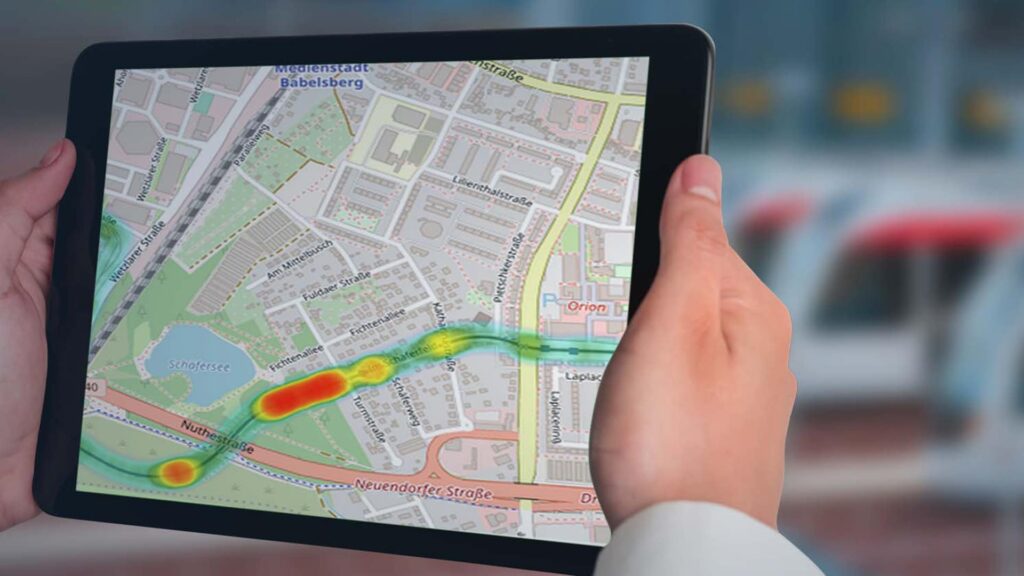
By monitoring “health states,” identifying optimization potentials in the network, and enabling predictive maintenance, our application development transforms your data into knowledge.

Subsystem integration for the vehicle control unit and operator network

SO IT ALL WORKS TOGETHER

When subsystem integration is performed for the vehicle control unit and operator network, we take full responsibility for combining multivendor architectures to form a functioning whole.

Innovations

WE’RE SHAPING THE FUTURE

We play an active role in both national and international research projects that are working to prepare rail vehicle technology for the challenges of future decades.

Development of a basic system

BASIS FOR THE FUTURE

By participating in international standardization projects, we’re contributing to the creation of a highly expandable and modular basic system of the future.

Device integration for SIMATIC PCS 7 / SIMATIC PCS neo

YOUR COMPONENTS IN A LEADING POSITION

Siemens’ SIMATIC PCS 7 and SIMATIC PCS neo control systems are leaders in the process industry. We take responsibility for a seamless, system-compliant integration of your products or third-party components.

PROFINET Stack Integration

WE HELP YOU MAKE IT TO THE BIG LEAGUES

You want to integrate PROFINET into your chips or devices – we handle the modification of the relevant stacks as part of a carefree package for you – right up to certification.

System integration for industrial communication

SO THAT NO DATA-POINT IS LOST

Whether it’s PROFINET, OPC UA, MQTT, or applications based on them, we take on the complete integration of products for industrial communication into your system environment.

Development of IoT and edge applications

DATA BECOMES THE BASIS FOR DECISION-MAKING

You want to turn big data into smart data. We’ll build your application – from data acquisition (connectivity) and data transmission to data evaluation and utilization.

IO-LINK LIBRARY FOR SIMATIC PCS 7/SIMATIC PCS NEO

Secure point-to-point connections in industry are relatively easy to implement with the right IO-Links. We offer you the right driver so that integration is in full compliance with the system.

TURCK Remote IO FOR SIMATIC PCS 7

The system-compliant connection of TURCK systems to the SIMATIC PCS 7 process control system doesn’t have to be time-consuming. Our function block library ensures maximum convenience at the user end.

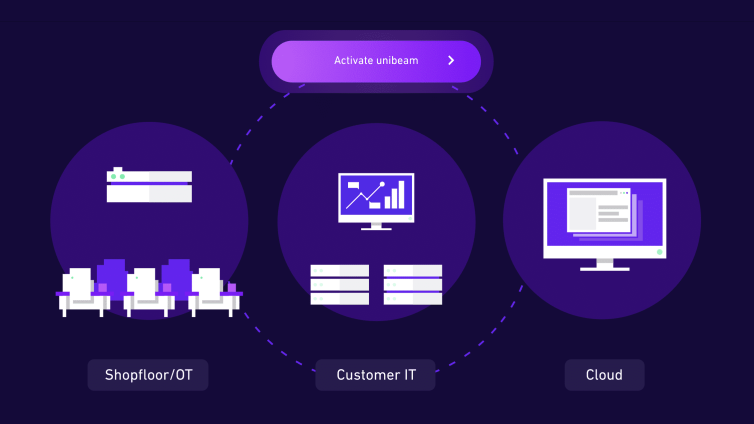
unibeam. - And suddenly it's all Smart Factory.

Do you want to experience a new generation of IIoT-platforms? Discover unibeam: an amazingly simple and efficient software to help SMEs unfold their whole potential of digitalisation.

Cyber security for component manufacturers

SECURE FROM THE START

How we help you eliminate potential vulnerabilities in your products – from product development throughout the entire lifecycle.

Cyber security for plant operators:

MORE PROTECTION FOR YOUR ASSETS

How we can help you monitor and mitigate risks during operation – supported by our combination of system, software, and security expertise.